Category: Travel Guides

  • Kendwa or Nungwi: Which Zanzibar Beach Should You Choose?

    Kendwa or Nungwi: Which Zanzibar Beach Should You Choose?

    Choose Kendwa if you want calm, swimmable water at any hour, wide sand, big sunsets and a quieter evening. Choose Nungwi if you want the widest choice of restaurants, bars and activity operators on the north coast. The two beaches are only two to three kilometres apart (about 1.5 miles), so the decision is about the pace of your days, not about distance. For couples, families and small groups who want to unwind, Kendwa is the better base, and Nungwi is an easy evening out.

    Velora resort – Kendwa zanzibar
    Make Kendwa Your Calm Base
    Velora Resort offers a tranquil Kendwa stay with a pool, wellness treatments and concierge services for excursions and transfers.

    Visit

    TL;DR

    • Swimming: Kendwa is the north coast’s most consistent swimming beach, because the seabed drops into deep water close to the sand.
    • Atmosphere: Nungwi is larger, busier and more developed. Kendwa is smaller and calmer, with a monthly Full Moon party as its big social night.
    • Best for: Kendwa suits couples, honeymooners and families who want quiet. Nungwi suits first-timers who want nightlife, dining variety and dive shops on the doorstep.
    • Both sides: You can base yourself in Kendwa and still reach Nungwi, Mnemba and Stone Town easily.
    • Where to stay: Velora Resort is a boutique stay in Kendwa, about 600 metres (0.4 miles) on foot from Kendwa Beach, with a pool, breakfast, dinner on request, massages, transfers and excursions.

    Table of Contents

    How Kendwa and Nungwi differ at a glance

    Both villages sit on the north-west tip of Zanzibar. Both face west, so both get sunsets over the water. Some travel guides even describe them as effectively one beach zone, with many travellers choosing on hotel availability. That is fair as far as the sand goes. The difference is in what happens behind the beach.

    Kendwa Nungwi
    Size and feel Smaller, calmer, resort-oriented Larger, more developed, social
    Beach Broad and sandy, with deep water close inshore Wide and lined with bars and loungers on the west side
    Tide effect Mostly insignificant for swimming Modest on the west side, much larger on the east side
    Evenings A few beach venues, Full Moon party monthly The widest choice of restaurants and late bars
    Best for Couples, honeymooners, swimmers, families with young children First-timers, social travellers, divers

    In short: Nungwi is the island’s most developed beach area, with a dense strip of hotels, bars and restaurants. Kendwa has a quieter pace, fewer bars, wider open stretches of sand and a more spread-out selection of resorts.

    Tides and swimming: why Kendwa stands out

    Tides are the thing first-time visitors to Zanzibar worry about most, and with good reason. On the island’s east and south coasts, low tide can expose wide bands of reef, seagrass and sand, and the sea can sit hundreds of metres from your sunbed.

    The north-west tip is different. The tide range across Zanzibar is similar everywhere, roughly three to four metres or more. What changes from beach to beach is the shape of the seabed near the shore. Where it drops away quickly, as at Kendwa and on Nungwi’s west side, the same tidal drop uncovers very little ground.

    The figures reported for the area are:

    • Nungwi’s main beach recedes only about 25 to 30 metres at low tide.
    • The eastern side of the Nungwi peninsula can recede around 500 metres.
    • At Kendwa the effect on swimming is described as mostly insignificant.

    A low-tide guide to Zanzibar’s beaches ranks Kendwa first among beaches that remain swimmable at low tide, with Nungwi’s west side second. It adds one practical note: at the biggest spring lows, even Kendwa means a longer wade before the water is deep enough to swim.

    A safety note for the water

    A beach that stays swimmable is not the same as a beach that is risk-free. Local guidance is to swim where the area is known to be suitable, watch children closely and avoid walking far across exposed flats without knowing the return route and timing. Shallow water can hide rocks, sea urchins or channels. If you plan to wade or walk at low tide, ask your hotel’s team about conditions that day before you set out.

    Sunsets, sand and the feel of each beach

    Kendwa’s signature experience is simple: broad beach time and a west-facing sunset. The sand is broad, with more usable width than most of the island at either end of the tide. The water is a vivid turquoise, and the evening light does the rest. Swimming, boat trips, diving, fishing, sailing and snorkelling are all on offer from the beach.

    Nungwi’s beach is lively. Expect loungers, beach bars and string lights in the evening. Behind it, the village has working dhow yards (the traditional wooden sailing boats of the region), a fish market and a turtle sanctuary. If you like a beach with something happening around you, Nungwi delivers that.

    Nightlife and the Full Moon party

    Nungwi has the more active nightlife, with bars open late. Kendwa’s best-known night is its Full Moon party. Travel writers report that it has run since 1996, growing from a small beach-fire gathering into a monthly event with DJs, fire shows and a buffet, going on until sunrise. Tickets have been reported at around US$12, though you should check the current price locally.

    If a party is not your idea of a holiday, it is easy to enjoy a quiet Kendwa evening on the sand and skip it. Most nights are calm.

    Things to do around Kendwa and Nungwi

    Snorkelling and diving at Mnemba

    Mnemba Atoll, off the north-east coast, is the area’s best-known marine reserve. It is a privately owned marine sanctuary with more than 400 recorded fish species, reached by boat. Nungwi is one of the closest mainland points to Mnemba, which is why most dive schools there run daily Mnemba trips. You can join these from Kendwa as well.

    Boat trips and sunset dhow cruises

    Sunset dhow cruises are a north-coast classic. Reported prices start from around US$35 per person, though prices vary with season and operator. Our concierge can arrange boat days and fishing; see the excursion list below.
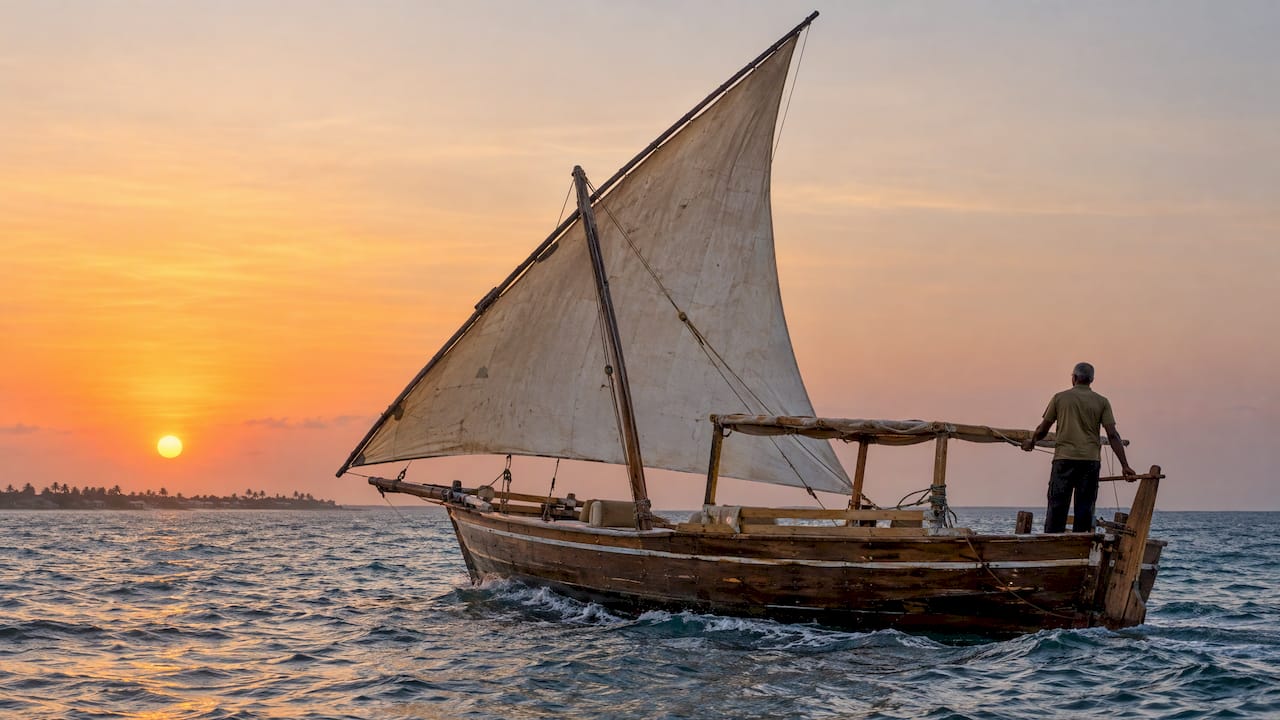
    Wooden dhow sailing off Kendwa at sunset

    Water sports at Kendwa

    Besides snorkelling and diving, Kendwa’s bay has wakeboarding and parasailing, which suits groups with a mix of energetic and relaxed travellers.

    Day trips across the island

    Stone Town, the old capital and a UNESCO-listed historic centre, is the classic cultural day out, and spice farms are the classic countryside one. Both fit comfortably into a stay based on the north coast. The south of the island, including its dolphin and reef areas, makes a longer day.

    Nearby beaches worth a detour

    • Nungwi: the most established and most visited beach, with a widely photographed dhow harbour and the best tourist infrastructure.
    • Matemwe: to the north-east, with wide sandy beaches, very clear water and Mnemba trips, but more exposed tidal areas and a rougher sea in the windy months of June to October.
    • Kiwani: a quieter coastline with a handful of exclusive properties.

    For reliable swimming and sunsets, Kendwa and Nungwi remain the best bets. Matemwe is the pick if your priority is a quiet base for snorkelling and diving.

    Eating out: where Kendwa guests dine

    Here is the honest trade-off. Nungwi has the widest restaurant choice on the north coast, and most Kendwa guests do eat in Nungwi, roughly 15 minutes away. Kendwa itself has fewer restaurants and shops within walking distance, which is part of its charm and the reason many visitors pick a stay with good dining on site.

    You can also walk between the two villages along the shore. It takes roughly half an hour on foot at low tide, but the rocky stretch is impassable at higher tides, so check the tide before you set off. A local taxi is the easy alternative for the return after dark.

    When to visit

    The long dry season, from June to October, is the most popular time for beach holidays in Zanzibar, with a shorter dry spell in January and February. The long rains, known as Masika, fall from March to May, and visibility for snorkelling drops as rain runoff and plankton cloud the water. Short rains usually pass through in November and December, mostly in brief spells.
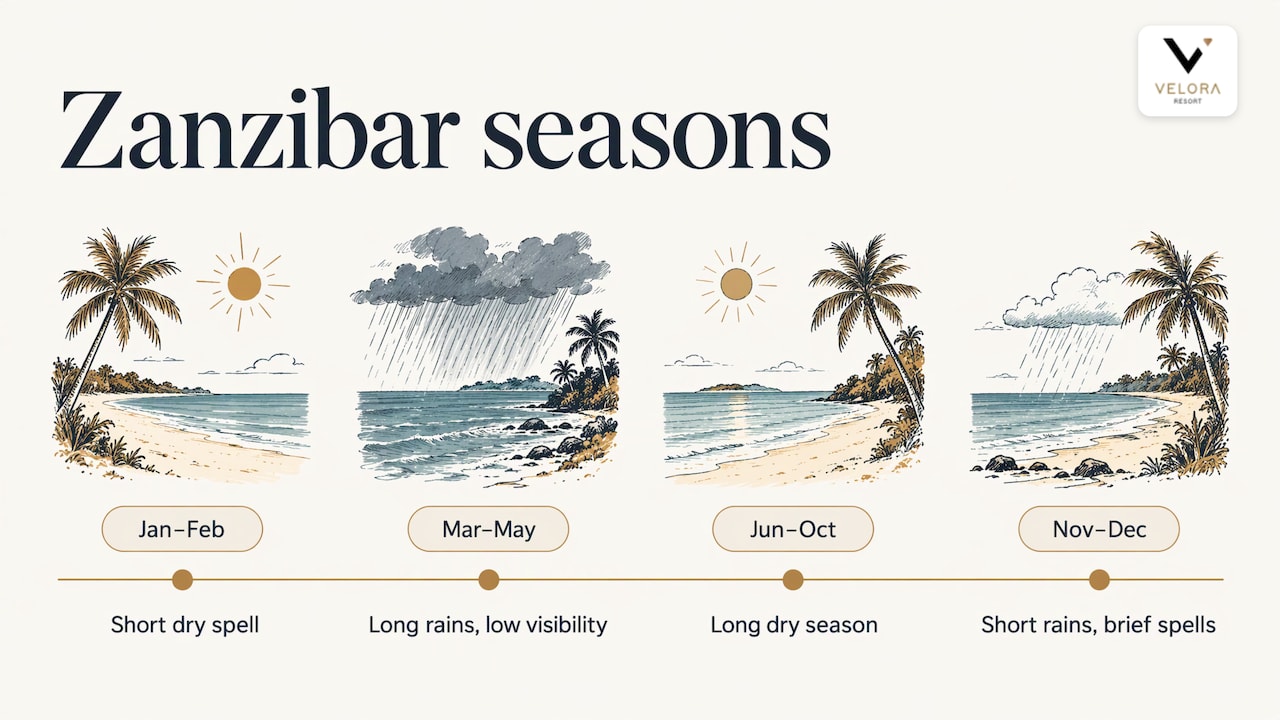
    Zanzibar seasonal weather and snorkelling visibility calendar

    About the windy months: June to October can bring a choppier sea on the exposed north-east side. Kendwa, facing west, is a good choice year-round for calm swimming.

    Some smaller hotels and dive centres close for maintenance during the long rains, so confirm that your stay and excursions are running before you book.

    Which beach suits you?

    Couples and honeymooners

    Couples should weigh privacy, sunset position and noise from beach venues. Kendwa’s quieter pace, deep turquoise water and west-facing sunsets are why it is regularly recommended for honeymoons. If you are planning a honeymoon, our guide to a honeymoon in Zanzibar covers where to stay, when to go and how to plan.

    Families

    Families need room configuration, pool access, meal flexibility and easy beach access. A family-travel guide points to Nungwi and Kendwa as the best beaches for kids, because tides are minimal and swimming is possible all day. It rates Kendwa as particularly good for toddlers and young children. A hotel pool gives smaller children somewhere to splash between beach sessions.

    Small groups

    Friends travelling together usually want a place where everyone has their own room and a shared terrace or pool to meet at. Kendwa’s resort-style stays suit that. Nungwi works well if part of the group wants late nights out.

    Whichever beach you choose, check the property’s exact beach frontage and evening activity, since quiet and busy properties exist in both places.

    Getting there

    Airport transfers to the north coast cover roughly 60 to 64 km and usually take one to one and a half hours. After a long flight, it helps to have the transfer arranged in advance. Velora Resort offers an airport transfer for US$50 one-way, listed on our FAQ page.

    Where to stay: Velora Resort in Kendwa

    Velora Resort is a boutique resort in Kendwa, about 600 metres on foot from Kendwa Beach. It is small and personal, run by a welcoming local team, with the kind of calm that Kendwa is known for.

    What guests can expect:

    • Rooms: air-conditioned Deluxe Queen, Triple and Deluxe Triple rooms with private balconies and ensuite bathrooms, so couples, families and small groups each find a fit. See the rooms and accommodation page.
    • Pool and terrace: a swimming pool and terrace for the hours between beach sessions.
    • Food: breakfast, and Dinner on Demand for evenings when you would rather stay in than travel to Nungwi.
    • Wellness: massages and wellness treatments.
    • Wi-Fi: free Wi-Fi throughout.
    • Transfers and excursions: airport transfers and concierge-arranged trips.
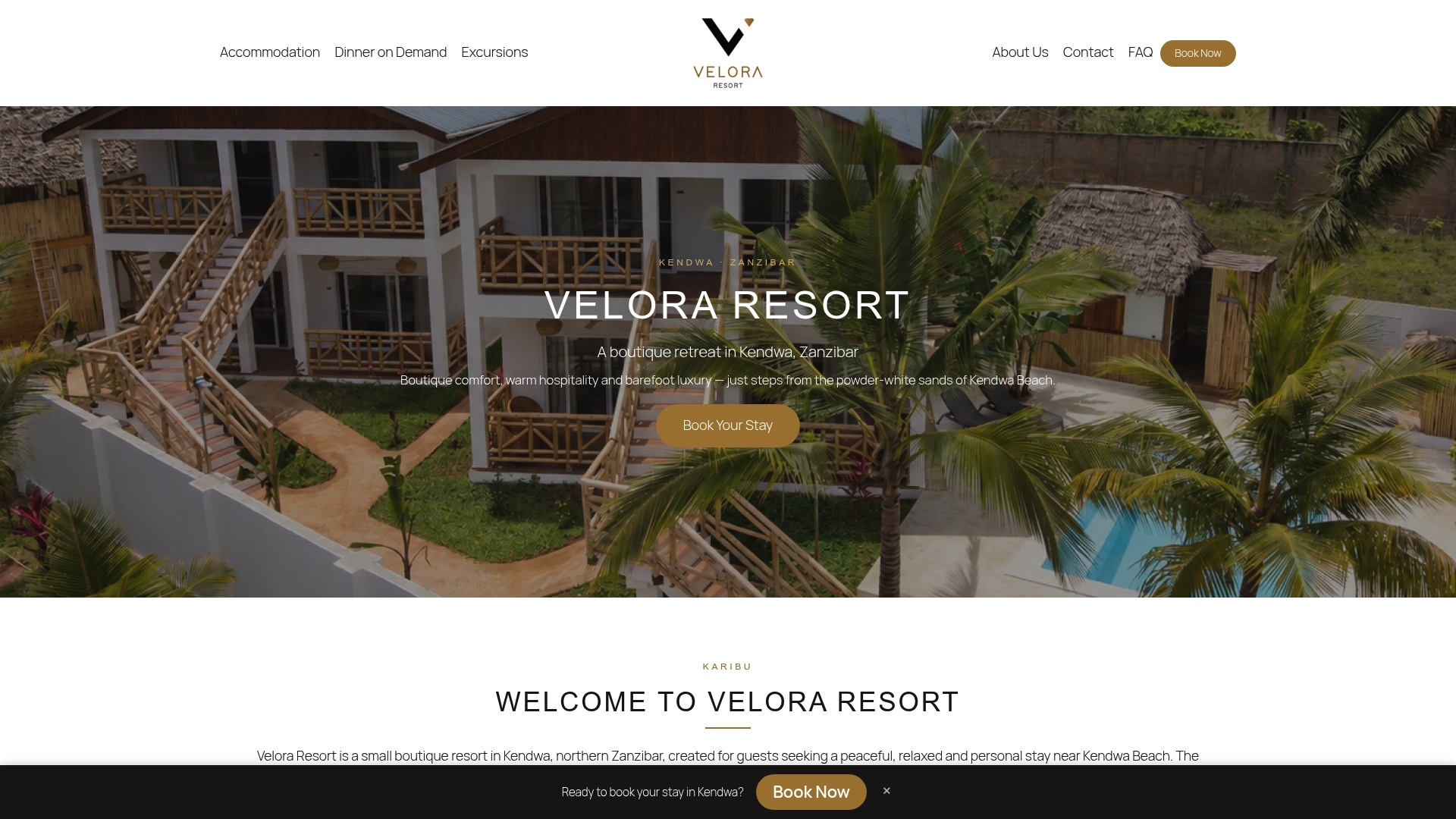
    Velora resort - Kendwa zanzibar

    To plan your stay, see our rooms and accommodation or visit the Velora Resort home page.

    Excursions arranged by our concierge

    The published prices on our excursions page are per person:

    Excursion Price per person
    Spice Tour €15–€60
    Stone Town Tour €30–€70
    Nakupenda Bis €40–€80
    Authentic Zanzibar €45–€110
    Visit of the South €60–€140
    Mikumi Safari €380–€430

    Deep-Sea Fishing is also arranged through the concierge. The page lists the current options and details.

    A simple way to decide

    1. Do you want to swim at any hour with young children or a partner? Pick Kendwa.
    2. Do you want a long list of restaurants and bars within walking distance? Pick Nungwi, or stay in Kendwa and take the short ride in the evening.
    3. Is a Mnemba dive or snorkel day a priority? Either works, because trips run from the whole north coast.
    4. Do you want quiet nights and a personal welcome? A small Kendwa resort fits best.

    FAQ

    Is Kendwa better than Nungwi?

    For calm swimming and quiet, yes. Kendwa has a broad beach with deep water close to shore, and the tide has little effect on swimming. Nungwi is better if you want a larger choice of restaurants, bars and activity operators.

    Can I swim at both beaches at low tide?

    Mostly, yes. Kendwa and Nungwi’s west side are the most swimmable north-coast beaches at low tide, while Nungwi’s eastern side recedes much further. At the biggest spring tides, you may still have to wade out a little way. Always check local conditions and watch children closely.

    How far apart are Kendwa and Nungwi?

    About two to three kilometres. You can walk the shore at suitable tides in about half an hour, or take a short taxi ride. The rocky stretch between them is impassable at high tide.

    Which is better for families?

    Both work, because tides are minimal and swimming is possible all day. Kendwa is the calmer option, and especially good for toddlers and young children. Nungwi has more restaurants and shops close by.

    Is Kendwa good for a honeymoon?

    Yes. Its quiet pace, turquoise water and west-facing sunsets make it a popular honeymoon choice on the north coast, with Nungwi’s dining and boat trips a short ride away.

    Sources

    Written with BabyLoveGrowth to grow organic traffic

  • Hotel Breakfast Included: What It Covers and How to Check

    Hotel Breakfast Included: What It Covers and How to Check

    Breakfast is “included” only when the exact rate you select says so, for your room, your dates and your number of guests. A hotel page can mention breakfast prominently and still sell a room-only rate. This guide shows you where to look, what the codes mean, which breakfast formats exist and which questions to settle before you pay. It also explains what a relaxed beach morning looks like at a small resort such as Velora Resort in Kendwa, Zanzibar, where on-site dining and breakfast are part of the stay.

    Veloraresort
    Make room for a calmer beach stay
    Velora Resort in Kendwa offers on-site dining, air-conditioned accommodation and a welcoming local team near Kendwa Beach.

    TL;DR

    • Read the rate details, not the hotel’s amenity list: a listing that mentions breakfast does not mean every rate includes it.
    • Look for wording such as “Breakfast included”, “Bed and breakfast” or “BB”. “Room only” or “RO” means no meals.
    • “Included” can mean a buffet, a set menu, a grab-and-go bag or a credit, so confirm format, hours, guests covered and drinks.
    • The cost of breakfast is built into the room price, so compare total prices rather than the word “free”.
    • If you have a serious food allergy, speak to the kitchen staff before arrival.

    Table of Contents

    How to tell if breakfast is included in your booking

    Start at the last screen before payment, not the first search result. Hotels sell several rates for the same room, and breakfast is often the difference between them. Check the room, dates and number of guests attached to the rate you are actually choosing, because the benefit is subject to the conditions of that rate.

    Here is a simple order to follow:

    1. Open the rate description. If breakfast is included, it usually says so in the room or rate description or in the price breakdown, with phrases like “Breakfast included” or “Bed and breakfast”.
    2. Watch for negative wording. “Room only”, “RO” or “Breakfast available for a fee” mean you will pay for breakfast separately.
    3. Read the confirmation email. It should repeat the meal plan. If it says nothing about breakfast, treat breakfast as not included.
    4. Write to the property. If anything is vague, ask before you arrive, giving your dates and room type so the answer is specific.

    A useful habit is to screenshot the rate details at the moment you book. If the hotel’s front desk reads your reservation differently on arrival, you have the wording in hand.

    Meal plan codes in plain English

    International hotels, especially resorts, often use short codes. These are the common ones, as listed by In Your Travel:

    Code Name What you get
    RO Room only No meals
    BB Bed and breakfast Breakfast
    HB Half board Breakfast and dinner
    FB Full board Three meals
    AI All-inclusive Meals and, usually, more

    These codes are most common outside North America. In the US, listings tend to say “free breakfast” or “complimentary breakfast” instead, which can hide the same variations in format. If you are booking a trip to a beach destination, expect to see the codes more often, and read what the plan covers in the fine print.

    What “included” does and does not cover

    The word promises a defined benefit, not a particular meal. The benefit could be a plated meal, buffet access, a set menu, a grab-and-go bag, a restaurant credit or lounge food. Those are very different mornings, so it pays to know which one you have.

    It is paid for, just not separately

    A complimentary breakfast is built into the room price, so you do not pay extra at the restaurant, but you do pay for it in the nightly rate. This matters when you compare two rates: a slightly higher price with breakfast can be better value than a lower room-only rate, particularly for a family where several people eat.

    Who is covered

    Breakfast usually covers the number of guests in the booking, but extra guests or children may pay separately. For families, check the age at which children count as paying guests.

    What may be left out

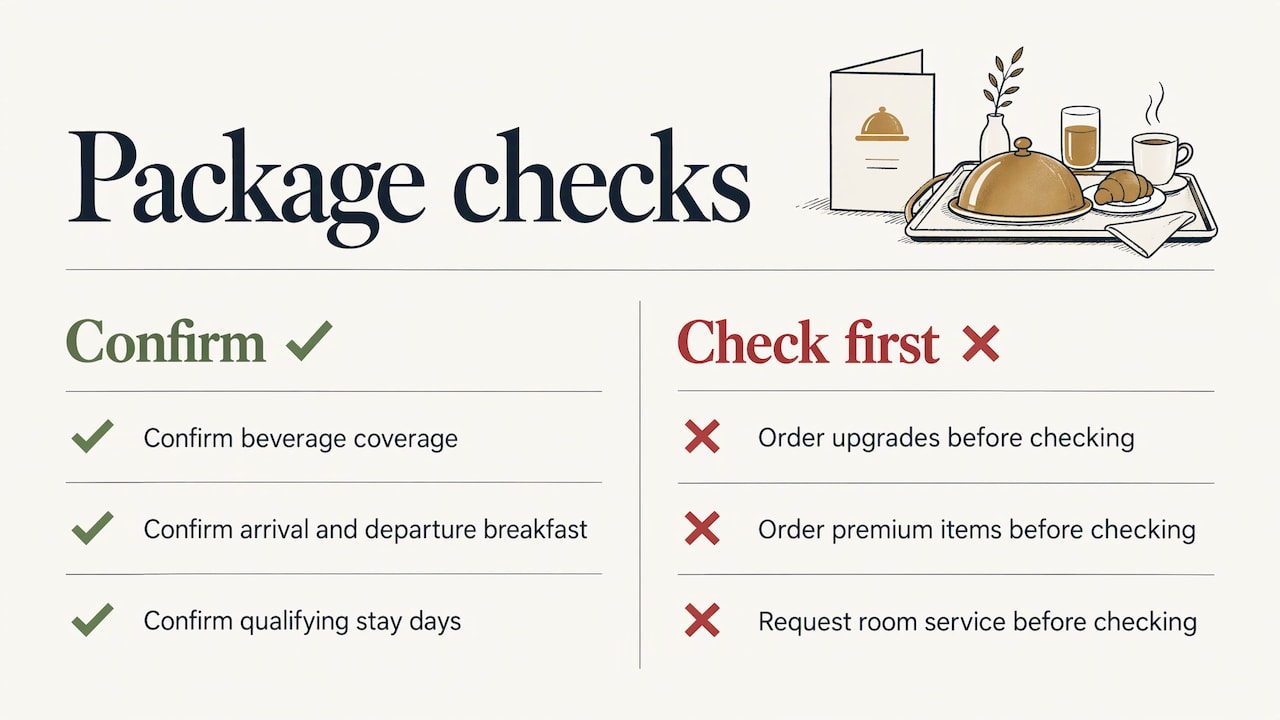
    For a credit or package, it may not cover every incidental dining charge, so check before ordering upgrades, premium items or room service. Other items worth confirming include beverages, the arrival-day and departure-day breakfast, and which days of the stay qualify.

    What may be left out

    Hot options and supplements

    Some hotels include a basic spread and charge extra for cooked dishes. One hotel breakfast guide frames the point as avoiding surprise charges: breakfast should be in the room rate, with any supplements for hot options clearly separate.

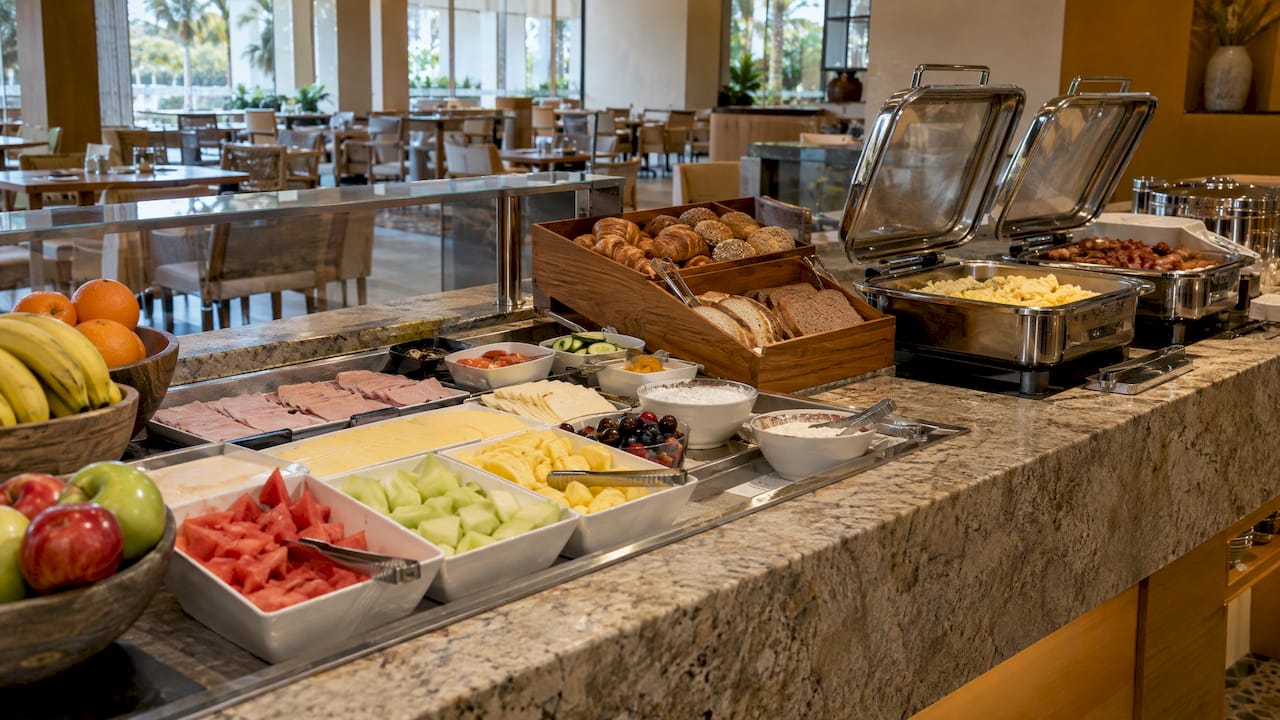
    Cold buffet items beside a cooked breakfast dish

    Adding breakfast later

    You can usually add breakfast after booking, at the front desk or by paying at the restaurant. A package bought in advance is sometimes cheaper, so it is worth comparing before you arrive rather than deciding at the table.

    Types of hotel breakfast

    The format tells you what your morning will feel like. Hotel Crafted’s overview separates the main styles, and the table below summarizes them.

    Type What it is Best for
    Continental Cold items: bread, pastries, butter, jam, yogurt, fruit, cereal, juice, coffee, tea, often cheese and cold cuts Light eaters, early starts
    Full or American Hot food cooked to order or kept warm: eggs, bacon or sausage, potatoes or toast, often pancakes or waffles A big meal before a long day
    Buffet Self-service spread, cold only or with warm dishes Groups and families with different tastes
    À la carte A short menu, each dish cooked and plated to order A slower, more personal meal
    Set menu One plated breakfast for everyone Small inns and B&Bs
    In-room or basket A tray delivered to your door Lazy mornings, couples
    Grab-and-go Coffee, fruit and pastries to take with you Early departures
    Local or regional Dishes and products from the area Travelers who want a taste of the place

    The real dividing line is cooking. Continental breakfast is prepared ahead and set out, while a full breakfast needs a cook at the stove during service. Buffets offer the widest range, à la carte offers fewer items but freshly prepared ones, and room-service breakfast arrives by card, menu or box. Continental is lighter and simpler than a full English, usually built around baked goods with butter or jam and often coffee.

    If the listing only says “free breakfast”, assume it could be any of these until the details say otherwise.

    What to confirm before you book

    The following checks take a few minutes and prevent most breakfast disappointments. They draw on the verification lists published by HotelInfo and GetCostidea.

    • Guests covered. One guest, two adults or everyone on the reservation?
    • Format. Buffet, set menu, à la carte, grab-and-go or a fixed credit?
    • Hours and place. Where is it served, and until when? Late risers need this one.
    • Children. Pricing and age limits.
    • Drinks. Are coffee, juice and tea included, or only certain ones?
    • Room service. It is often excluded.
    • Arrival and departure days. Whether the first and last mornings count.
    • Booking channel and loyalty rules. Some benefits apply only when booking in a particular way.
    • Taxes and fees. Whether the displayed price already includes them.
    • Credit rules. Whether an unused daily credit expires instead of rolling over.

    When you write to the hotel, make the question precise: give your dates and room type and ask what your specific rate includes. A precise question gets a precise answer.

    Food allergies and dietary needs

    The US Food and Drug Administration names nine major food allergens: milk, eggs, fish, crustacean shellfish, tree nuts, peanuts, wheat, soybeans and sesame, as summarized by GetCostidea. If you have a serious allergy, talk directly with knowledgeable staff in the kitchen or restaurant rather than relying only on buffet labels. A dish marked vegan or gluten-free can still touch an allergen during preparation or buffet service. Tell the property about the allergy before you travel, and again at your first breakfast. For a medical allergy, your own doctor is the person to ask what precautions you need while traveling.

    Breakfast on a beach holiday: why the setting matters

    On a city trip, breakfast is fuel. On a beach holiday it is part of the day’s rhythm: you wake early because the light is good and the sand is empty, eat unhurried, and decide what the day holds. That changes what you should look for.

    • A short walk, not a shuttle. The best breakfast is the one you actually get to. A property steps from the sea means you can swim first or eat first.
    • Dining on site. When the same kitchen serves breakfast and dinner, you can plan the whole day without leaving the property.
    • A small property. Fewer guests mean a calmer breakfast and staff who learn how you take your coffee.
    • Help with the day. Excursions and transfers arranged by the people who know the area save you the guesswork.

    These are the qualities that make a morning feel like a holiday rather than a queue.

    Velora Resort: a calm morning in Kendwa

    Velora Resort is a boutique retreat in Kendwa, Zanzibar, close to Kendwa Beach, built for couples, families and small groups who want a quiet, personal stay. Rooms are air-conditioned, with private balconies and ensuite bathrooms, and you can choose between the Deluxe Queen Room, the Triple Room and the Deluxe Triple Room. A swimming pool and terrace, on-site dining and breakfast, free Wi-Fi and wellness treatments and massages sit alongside the rooms, and a welcoming local team looks after guests.

    Veloraresort

    See the rooms and accommodation page to compare the three room types and pick the one that suits your group. If you want dinner after a day out, the Dinner on Demand page explains that option, so one team can cover the morning and the evening.

    Arrive without the logistics

    Airport transfer costs 50 USD one-off, so you can step off the plane and straight into your holiday. Details are on the resort’s FAQ page, where massage services are also covered. A massage after a morning swim is an easy way to start a slow day.

    Plan your days from the same place

    The concierge arranges excursions, with per-person prices published on the excursions page:

    Excursion Price per person
    Spice Tour 15-60 EUR
    Stone Town Tour 30-70 EUR
    Nakupenda Bis 40-80 EUR
    Mnemba Island 45-185 EUR
    Authentic Zanzibar 45-110 EUR
    Visit of the South 60-140 EUR
    Mikumi Safari 380-430 EUR

    Deep-sea fishing is also available. The ranges depend on the option you choose within each excursion. A hearty morning meal before a Stone Town walk or a boat trip to Mnemba makes the day easier, and an early start suits the heat.

    How to compare breakfast rates across any hotel

    Whatever you book, a short routine gives you a fair comparison.

    1. Price the same stay twice. Look at the room-only rate and the breakfast rate for the same dates and room.
    2. Count who eats. Multiply the cost of breakfast by the number of adults and children who will actually eat it. A family of four may find the included rate clearly better.
    3. Check the format against your habits. If you want a cooked meal, a continental spread will leave you buying extras. If you eat lightly, a full buffet is money you will not use.
    4. Think about timing. If you leave at dawn for a safari or a boat trip, a grab-and-go option or an early breakfast matters more than a lavish buffet.
    5. Note the cancellation terms. Rates with breakfast sometimes carry different rules from room-only rates.

    This takes five minutes and usually settles the question. The word “free” is a marketing label. The number that matters is the total you pay for the whole stay and what you get for it.

    Common traps

    • Assuming the photo equals the plan. A picture of a lavish spread on the hotel page does not tell you what your rate includes.
    • Mixing up half board and bed and breakfast. Half board adds dinner, which changes the price and your evenings.
    • Forgetting the last morning. Some plans do not count the departure-day breakfast if you leave very early.
    • Ignoring extra guests. A third person in the room may not be covered.
    • Skipping the confirmation email. It is your record of what was agreed.

    FAQ

    How do I know if breakfast is included in my hotel booking?

    Look at the rate description and price breakdown for wording like “Breakfast included”, “Bed and breakfast” or “BB”. “Room only” or “RO” means it is not included. If your confirmation is silent, ask the hotel before you arrive.

    What does “free breakfast” at a hotel actually mean?

    It means breakfast is bundled into the room rate, so you do not pay at the restaurant. The cost is still part of the price. The format can range from a hot buffet to a grab-and-go bag, so check the details.

    What are the main types of hotel breakfast?

    The main types are continental, full or American, buffet, à la carte, set menu, in-room, grab-and-go and local or regional. The key difference is cooking: continental items are prepared ahead, while a full breakfast is cooked during service.

    Does included breakfast cover children and extra guests?

    Usually it covers the number of guests on the booking, but extra guests or children may pay separately. Check the child age limits and the guest count in the rate details before you pay.

    Can I add breakfast after I have booked?

    Yes, in most cases. You can usually add it at the front desk or pay at the restaurant. Buying a breakfast package in advance is sometimes cheaper, so compare before you arrive.

    Sources

    Created with BabyLoveGrowth’s technology

  • Honeymoon in Zanzibar: Where to Stay, When to Go, How to Plan

    Honeymoon in Zanzibar: Where to Stay, When to Go, How to Plan

    The best Zanzibar honeymoon is simple: a quiet, small-scale stay on the north coast, planned for the dry months, with a few well-chosen excursions and plenty of empty hours. Kendwa, on the island’s northwest tip, is built for that. Its beach can be swum at almost any hour, the sunsets face the water, and a boutique resort like Velora Resort puts the beach, pool, dinner, massages and day trips within a few steps of your room. This guide covers when to go, where to base yourself, how many days to allow, what to book and what to sort out before you fly.

    Veloraresort
    Make Kendwa Your Honeymoon Base
    Velora Resort offers a tranquil Kendwa stay with private balconies, on-site dining, wellness treatments, and a welcoming local team.

    Visit

    TL;DR

    • Best months: roughly June to October, with a second good window from late December to February. The long rains fall around March to May.
    • Best base for relaxing: Kendwa, where the north-coast tides are gentle enough to swim nearly all day.
    • How long: five days covers the beach essentials, seven adds Stone Town and an inland day, ten to fourteen lets you add a mainland safari first.
    • Book ahead: Zanzibar requires its own travel insurance for visitors, and yellow fever rules depend on where you travel from.
    • Choose small: an intimate boutique stay with a welcoming local team suits a honeymoon better than a large resort.

    Table of Contents

    Why Zanzibar works so well for a honeymoon

    Zanzibar is an archipelago in the Indian Ocean, about 15 miles off the coast of Tanzania, and it has been called the Spice Islands for centuries because of its cloves, nutmeg, cinnamon and black pepper. For couples, the appeal is the mix. You get white sand and warm turquoise water, and you also get a layered Swahili, Arab, Indian and European history in the food and architecture of the old town.

    The island is also small. That matters more than any photo suggests: in a single week you can do a reef trip, a historic town, a spice farm and a sandbank without a long travel day. A honeymoon should not be spent in transit, and here it rarely is.

    Zanzibar also fits into a larger trip. Many newlyweds pair it with a safari on the Tanzanian mainland, finishing on the island after the early starts and long drives.

    When to go: seasons, rain and sea conditions

    The most reliable honeymoon window runs from roughly June to October, the cooler and drier season. A second appealing window runs from late December to February, when it is hotter and the sea is warm. The long rains arrive around March to May, and shorter rains often come in November.

    Temperatures give a clearer picture. According to a month-by-month climate table, June to August is dry and cooler, about 22 to 28 °C (72 to 82 °F), with sea temperatures around 25 to 27 °C (77 to 81 °F). December to February is hot and mostly dry with the warmest sea, about 28 to 30 °C (82 to 86 °F). April and May are the wettest months.

    Period What to expect Good for
    June to October Cooler, drier, comfortable days Beach time combined with a mainland safari
    Late December to February Hot, mostly dry, warmest sea Swimming, sandbank and boat days
    March to May Long rains, the wettest stretch Quieter island, flexible plans
    November Shorter rains often arrive Fewer visitors, pack a light rain layer

    If your wedding date sets your travel dates, do not panic about the shoulder months. Plan more of your day around the pool, the spa and dinner, and keep excursions flexible.

    Tides matter more than most couples expect

    On the east and southeast coasts the sea can retreat a long way at low tide, sometimes around half a kilometer at Matemwe. That is beautiful to walk across, but it shapes when you can swim. On the north coast, around Nungwi and Kendwa, the tidal effect is small to moderate, so you can swim almost all day, especially at Kendwa. For a honeymoon, where spontaneous swims and sunset dips are half the point, that is a real advantage.

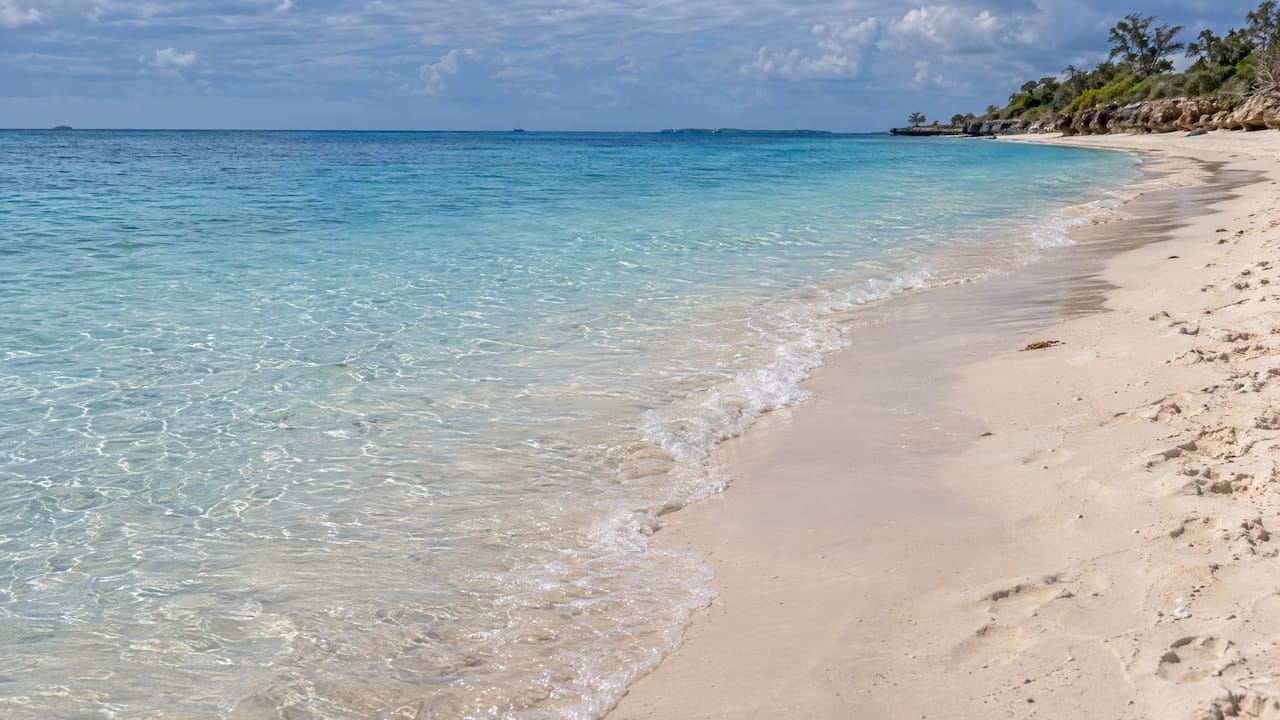
    Clear water close to Kendwa’s white-sand shore

    Choosing your area: why Kendwa suits couples

    Zanzibar’s coasts each have a different personality:

    • Stone Town: culture, history, narrow streets. Best as a day or an overnight, not as a beach base.
    • Nungwi: swimming, nightlife and a lively beach scene.
    • Kendwa: a beautiful beach, sunsets and relaxed resorts, with a calmer mood than its neighbor.
    • Paje and Jambiani (east and southeast): big tidal swings, kitesurfing and a more bohemian or quiet local feel.
    • Matemwe: very quiet, a launch point for Mnemba Island trips.

    If you want warm swimming at any hour, long sunsets and a relaxed evening, the north coast is the straightforward pick, and Kendwa is its most laid-back stretch. You can still reach livelier beach bars nearby for an evening, then return to a peaceful room.

    What to look for in a honeymoon stay

    Small properties tend to give couples what they actually want: privacy, attention and an unhurried rhythm. One honeymoon specialist says it favors small, boutique accommodation over large corporate hotels for exactly this reason: a honeymoon is meant to feel intimate and unique. Use this checklist:

    1. A short walk to the beach. The fewer logistics between breakfast and the water, the better.
    2. Air conditioning and a private balcony. Zanzibar is warm year-round, and a balcony gives you a private spot for morning coffee or a sundowner.
    3. A pool and terrace for the hours when the sea is not the plan.
    4. On-site dining and breakfast, so a late start never means a hunt for food.
    5. Wellness treatments and massages on the property, for a couples’ afternoon without leaving.
    6. A team that arranges the rest: airport transfers, excursions and dinners.

    That is the shape of Velora Resort in Kendwa: a boutique retreat steps from Kendwa Beach, with air-conditioned rooms, private balconies, ensuite bathrooms, a swimming pool and terrace, on-site dining, free Wi-Fi, massages and a local team that handles transfers and excursions. See the rooms and accommodation to compare the Deluxe Queen Room, Triple Room and Deluxe Triple Room.

    A Zanzibar honeymoon itinerary, by trip length

    How long you stay shapes what you can do. A useful rule of thumb from one guide: five days for the sunset, reefs, a sandbank and a day of doing nothing; seven days to add Stone Town and an inland day; ten to fourteen days to put a safari in front.

    Five days: beach first

    • Day 1: Arrive, transfer to Kendwa, swim, watch your first sunset.
    • Day 2: Slow morning, pool and a massage in the afternoon.
    • Day 3: A boat day. Nakupenda Bis (€40 to €80 per person) or Mnemba Island (€45 to €185 per person) are the sea-focused options Velora arranges.
    • Day 4: A spice tour (€15 to €60 per person), then a private dinner.
    • Day 5: One last swim, then depart.

    Seven days: add culture

    Keep the five-day shape and add a Stone Town tour (€30 to €70 per person) to walk the old town’s lanes and markets. Add Authentic Zanzibar (€45 to €110 per person) for an inland day, and leave at least two days completely empty. Empty days are the ones couples remember.

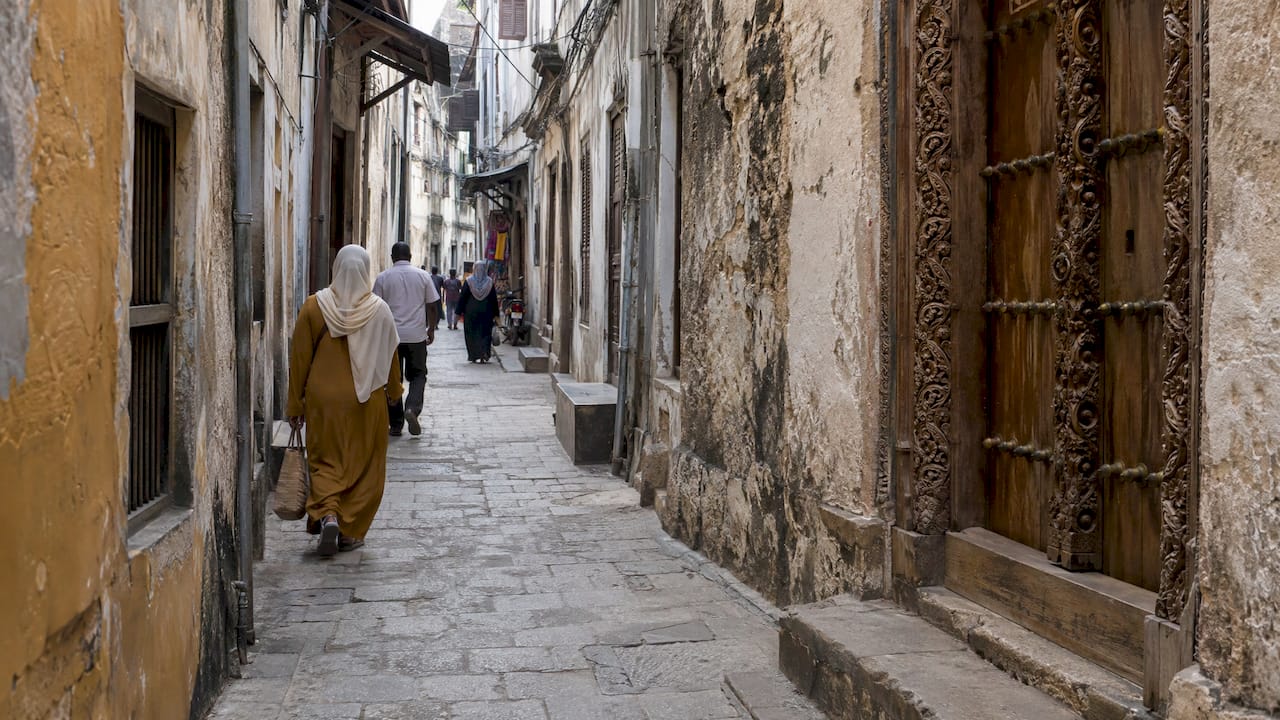
    Weathered Stone Town lane and carved wooden doorway

    Ten to fourteen days: safari plus beach

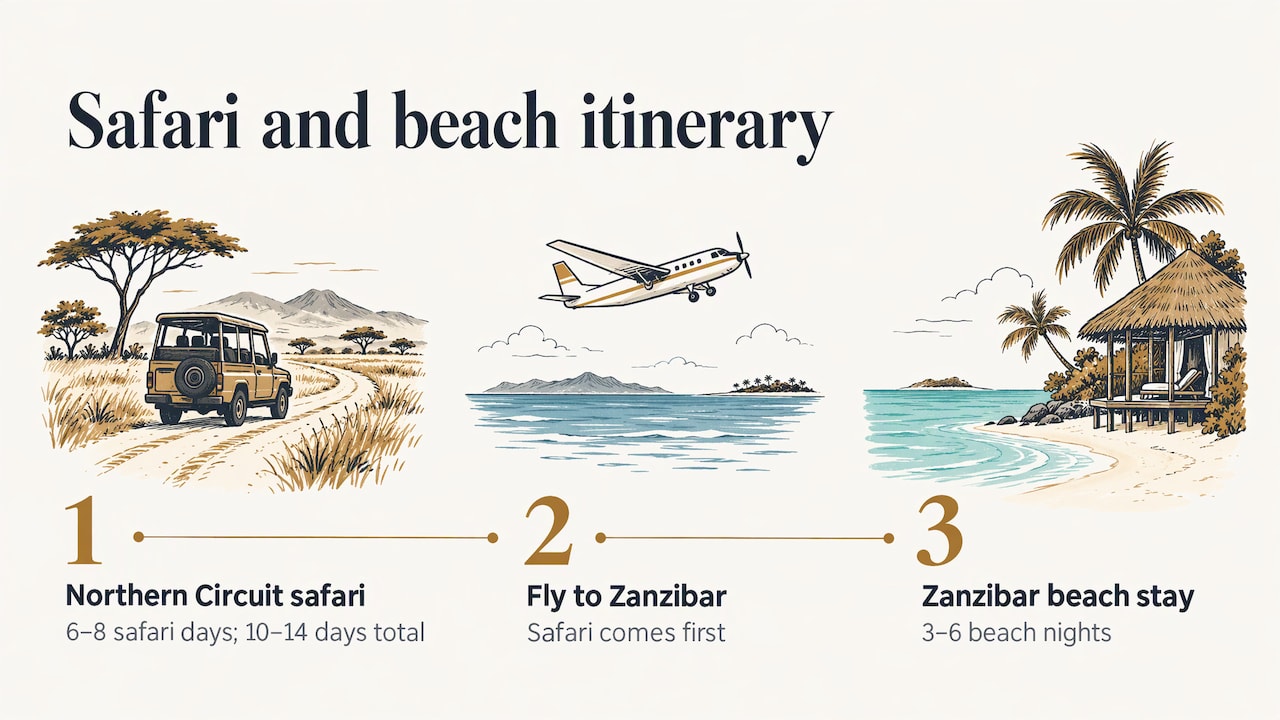
    A safari-and-beach trip works best over 10 to 14 days. Most travelers spend six to eight days on safari first on the Northern Circuit (Serengeti, Ngororongoro Crater, Tarangire), then fly to Zanzibar for three to six beach nights. Safari first is the right order: the beach is your reward after early starts and dusty drives.

    Timeline of safari days followed by Zanzibar beach nights

    If you would rather keep your base on the island, Velora’s concierge arranges the Mikumi Safari (€380 to €430 per person) as an excursion, so you can see wildlife without rebuilding the whole trip around the mainland.

    Excursions and prices at a glance

    The prices below are Velora’s published per-person excursion rates, one-off, as read from the excursions page. Check the page for current details before you book.

    Excursion Per person
    Spice Tour €15 to €60
    Stone Town Tour €30 to €70
    Nakupenda Bis €40 to €80
    Mnemba Island €45 to €185
    Authentic Zanzibar €45 to €110
    Visit of the South €60 to €140
    Mikumi Safari €380 to €430
    Deep-Sea Fishing Ask the concierge

    The airport transfer is $50 one-way as listed on the resort FAQ, and the same page covers massage services. Dinner on Demand lets you arrange a special evening meal; details are on the Dinner on Demand page.

    Making the trip feel like a honeymoon

    A few choices turn a good beach holiday into a honeymoon:

    • Plan one special dinner, not five. Dinner on Demand is made for a night like that, so decide which evening and let the team arrange it.
    • Book the massage for the second afternoon, after the flight fatigue has worn off.
    • Pair a busy day with a quiet one. A full boat day should be followed by a pool day.
    • Time your sunsets. Kendwa faces the sunset, so keep your last hour of daylight free.
    • Let one person handle the plan. Letting a concierge arrange transfers and trips means neither of you is on a phone for logistics.

    Before you fly: entry, insurance and health

    These rules change, so confirm them on official pages close to your departure.

    Since 1 October 2024, visitors to Zanzibar must purchase travel insurance from the Zanzibar Insurance Corporation, costing $44 per person and valid for 92 days, even if they already hold other travel insurance. The requirement applies to Zanzibar, not mainland Tanzania. The same official summary notes that yellow fever vaccination is required for travelers over one year old arriving from a country at risk of transmission, including qualifying airport transits. If you are flying from the US via a mainland African hub or combining a safari first, check with a doctor or travel clinic well before the trip, since vaccines can take time to arrange.

    Pack light, breathable clothing and modest outfits for Stone Town, and keep shoulders and knees covered when you visit the old town and villages out of respect for local customs.

    Your honeymoon base in Kendwa

    If you are ready to turn the plan into a booking, Velora Resort is a boutique retreat in Kendwa for couples who want a tranquil, personal stay steps from the beach. Rooms come with air conditioning, private balconies and ensuite bathrooms, and the team handles your transfer from the airport and your excursions once you arrive. Look at the rooms, choose your dates and book directly through veloraresort.com.

    Veloraresort

    Guests praise the warm hospitality and attention to detail of the local team, which is what a honeymoon runs on: someone who remembers your name, your coffee and which evening you want the table by the water.

    FAQ

    How many days do you need for a honeymoon in Zanzibar?

    Five days covers the beach essentials: sunsets, a boat day and time to rest. Seven days lets you add Stone Town and an inland day. If you add a mainland safari, plan ten to fourteen days in total.

    What is the best month for a Zanzibar honeymoon?

    June to October is the most reliable window, with a second good one from late December to February. The long rains fall around March to May, and shorter rains often arrive in November.

    Is Kendwa good for a honeymoon?

    Yes. The north coast has a small to moderate tidal effect, so you can swim almost all day at Kendwa, and the area is known for sunsets and relaxed resorts. It is calmer than neighboring Nungwi while still close to evening options.

    Do you need travel insurance for Zanzibar?

    Yes. Visitors to Zanzibar must buy the Zanzibar Insurance Corporation policy, listed at $44 per person for 92 days, even with other cover. Confirm current terms on official pages before you travel.

    Sources