

Zanzibar is warm every month of the year. What changes is the rain, the humidity and the wind. June to October is the driest and coolest stretch, January and February are the hottest and calmest, and the heaviest rain falls from March to May, with April the wettest. Most holidays work in any month if you plan the days around the weather. This guide covers each month, what the numbers mean in practice, and how to plan a stay on the northwest coast at Kendwa, where we welcome guests at Velora Resort.
TL;DR
- Zanzibar has two rainy seasons: the long rains (March to May) and the short rains (October to December), with the dry months June to September, according to the Tanzania Meteorological Authority.
- June to September is the driest and coolest period, with daytime highs around 29°C (84°F) and nights near 22°C (72°F), per SafariBookings.
- January and February are very hot, often above 32°C (90°F), and mostly dry. Good for pool days and flat, warm sea.
- April is the wettest month. Plan spa time, Stone Town and spice tours rather than long beach days.
- Treat averages as guidance: rainfall varies a lot from year to year.
Table of Contents
- How Zanzibar’s climate works
- Zanzibar weather at a glance
- Month by month
- What the averages do not tell you
- Which month suits which traveler
- Choosing where on the island to stay
- Packing for the weather
- Planning your stay at Velora
- FAQ
- Sources
How Zanzibar’s climate works
Zanzibar sits about six degrees south of the equator, so there is no winter in the usual sense. Temperatures stay in a narrow band, and the calendar is split by rain and wind instead.
The Tanzania Meteorological Authority describes Zanzibar as a region with two rainy seasons: the long rains, called masika, from March to May, and the short rains, called vuli, from October to December. January and February are a relatively dry transition, and June to September are dry across Tanzania (Climate Statement 2018).
The wind follows a pattern too. A regional marine report from WIOMSA explains that Indian Ocean monsoons drive the island’s weather: north-easterly Kaskazi winds blow from November to March, and south-easterly Kusi winds from April to October. The same report puts average maximum temperatures at 30 to 32°C (86 to 90°F) on Unguja, the main island where Kendwa is.
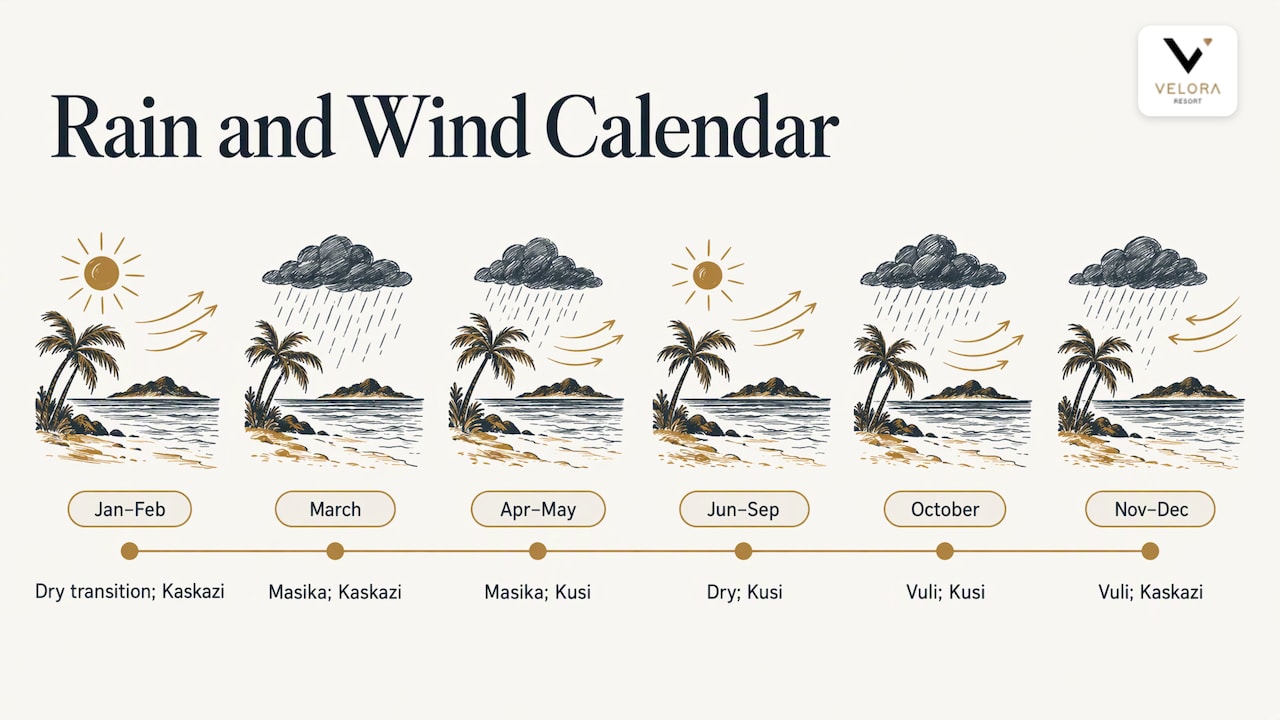
In short, the heat is constant, the humidity rises with the rain, and the breeze is what makes the dry-season months feel so comfortable.
Zanzibar weather at a glance
The table sums up the pattern. Temperature descriptions come from the sources linked in the sections below, and the rain labels follow the Tanzania Meteorological Authority’s season definitions.
| Month | Season | Feel | Rain | Best for |
|---|---|---|---|---|
| January | Dry transition | Very hot, calm | Light, drying through the month | Pool and beach days, calm sea |
| February | Dry transition | Hottest month | Low | Hot, flat-sea beach holidays |
| March | Long rains begin | Hot, humid | Rising | Quieter stays, flexible plans |
| April | Long rains | Warm, humid | Wettest month | Spa, culture, food |
| May | Long rains ease | Warm, cooling | Still wet, tapering | Slow, restful trips |
| June | Dry | Cooler, breezy | Low | Beach, excursions, all-round trips |
| July | Dry | Coolest nights | Low | Beach, excursions |
| August | Dry | Cool, clear | Low | Beach, excursions |
| September | Dry | Cool, clear | Lowest | Beach, excursions |
| October | Dry, then short rains start | Warming | Low early, rising late | Beach with some flexibility |
| November | Short rains | Warm, humid | Showers | Relaxed, good-value trips |
| December | Short rains ease | Hot | Showers, easing | Holiday beach time |
Month by month
January and February: hot, calm and mostly dry
January is the start of what many travelers call the short dry season. The rain of the previous months gradually clears, and the island heats up. SafariBookings describes January and February as very hot, with peaks above 32°C (90°F) on most days and nights that seldom drop below 24°C (75°F).
February is usually the hottest month. With the wind easing, the sea can be flat and warm, which suits swimming and lazy beach days. Humidity is noticeable, so air conditioning and a pool nearby matter more than they do in July. Our rooms are air-conditioned and have private balconies, which makes the afternoon hours easier to enjoy.
The sun is strong. Weather Atlas lists the UV index at 9 to 12 all year (Weather Atlas), so pack reef-safe sunscreen, a hat and a light long-sleeved shirt for any month.
March: the long rains start
March is when the long rains begin, gradually rather than all at once. Expect warm, humid days with growing odds of heavy afternoon or overnight downpours. Often a morning is bright and the rain arrives later, so you can still plan a beach hour or a tour before the clouds build.
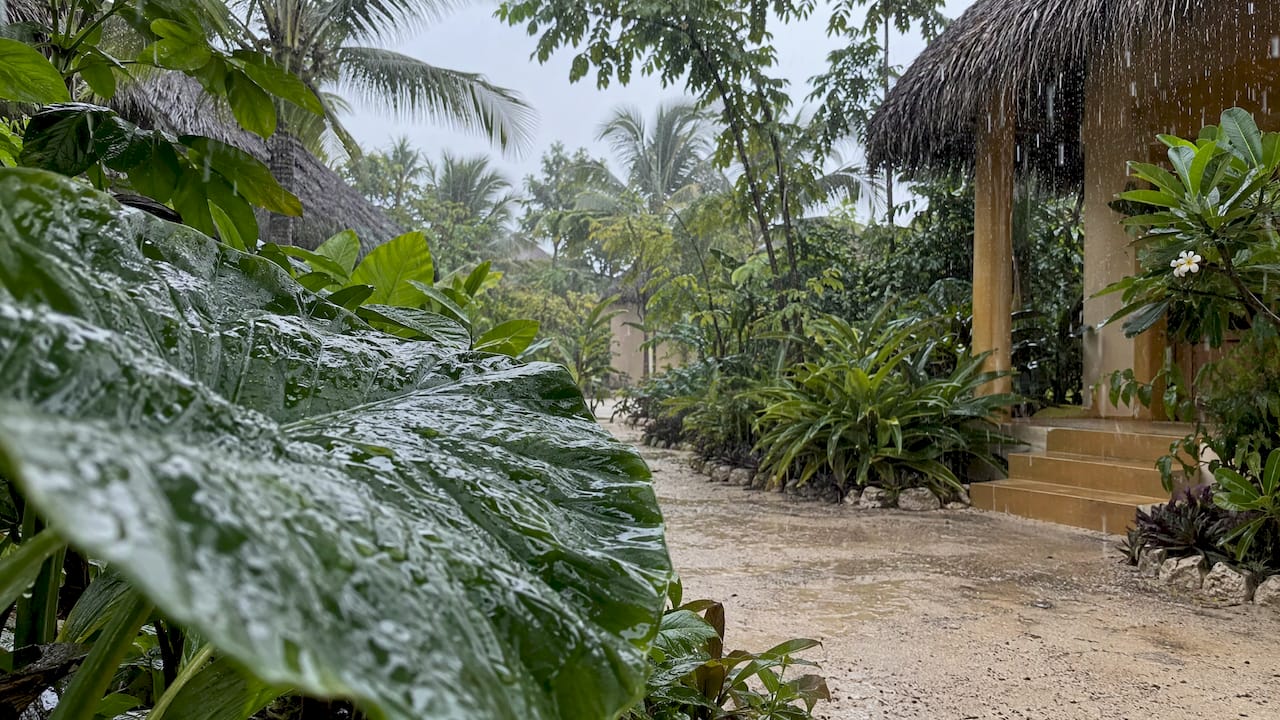
Travelers who do not mind a few wet spells find March quieter than the peak months. Keep plans flexible and book excursions with a team that can shift them by a day.
April and May: the wettest stretch
According to SafariBookings, well over half of Zanzibar’s annual rainfall arrives between March and May, and April is significantly the wettest month. Rain tends to come in heavy bursts. The sea is warm, but skies are often gray and the humidity is high.
This is the time to lean on everything that is not a long beach day:
- A massage or wellness treatment while the rain passes. We offer wellness treatments and massages on site.
- A Stone Town tour, which runs €30 to €70 per person depending on the option, and a spice tour at €15 to €60 per person.
- A long dinner. Our Dinner on Demand lets you arrange a private meal for the evening.
If you plan to dive or snorkel, know that the long-rains months can bring plankton blooms and lower underwater visibility. By May, the rain starts to taper, and the island greens up dramatically.
June to September: the dry, cool heart of the year
These are the months most travelers picture. SafariBookings describes June to September as the driest and coolest period, with daytime peaks around 29°C (84°F) and nights near 22°C (72°F). The south-easterly Kusi wind keeps the air fresher and the humidity lower.
The days are clear, the sky is blue and the sea is bright, so this is the easiest window for a mix of beach time and excursions. It also suits families with young children, who can be out most of the day without the heat of February. Rooms and flights for this season are in demand, so booking ahead pays off.
If you like to compare how other East African destinations handle their drier, cooler months, this month-by-month Kenya riding season guide shows the same logic of choosing the cool, dry window for outdoor days.
October: the turning point
October often starts dry and warm, then the short rains begin to appear later in the month. The Tanzania Meteorological Authority places the vuli short rains between October and December. In practice, early October still feels like the dry season, and mid-to-late October brings the first showers.
It is a good month if you want warm days without the heat of February, and you are happy to keep one afternoon free for rain.
November and December: short rains, warm sea
The short rains are shorter and usually lighter than the long rains, with showers rather than weeks of gray sky. Days are warm and humid, and the sea is warm. Many visitors find November a relaxed, good-value time to go, and December warms up again toward the January heat.
The short rains can still surprise. A 2020 study of Tanzania Meteorological Authority data found the 2019 short-rains season was extreme, with Kisauni on Unguja recording 936 mm, which is 198% of the long-term average for those months (SCIRP). The study linked it to a strong positive Indian Ocean Dipole, a pattern of warmer and cooler water across the ocean that can push rain well above normal. That is one reason a flexible schedule helps in these months.
What the averages do not tell you
A monthly chart shows a typical month. Real months vary. WIOMSA reports that annual rainfall on Unguja has ranged from 704 mm to 2,459 mm between years, with long-rains totals from 423 to 1,259 mm and short-rains totals from about 105 to 977 mm (State of the Coast for Zanzibar). A dry-season month can bring a shower, and a wet-season month can bring a week of sun.
The same report notes that minimum temperatures are rising by about 0.095°C a year on Unguja, so nights are slowly getting warmer. Older charts may make nights look cooler than they feel today.
Two practical points follow:
- Choose a season, not a date. Decide whether you want the cool dry window, the hot calm window or the quiet green window, then pick your dates inside it.
- Keep one day open. A flexible day lets you move a boat trip or tour to the clearer morning.
Which month suits which traveler
Couples
For a honeymoon or a romantic break, the cool, dry months (June to September) give clear evenings for dinner outside, and January and February give hot days and calm water. Our guide to when to go for a Zanzibar honeymoon covers seasons, rain and sea conditions in more detail. In the wetter months, a spa afternoon and a private dinner turn a gray day into part of the trip.
Families
Families usually want predictable days. June to September keeps the heat gentler for children, and the pool is useful in every month. Our Triple Room and Deluxe Triple Room give three travelers space to share, and you can see them on our accommodation page.
Small groups
Groups of friends or relatives have the most room to be flexible. A split of beach days and one or two excursions works in almost any month, and the longer safari option, the Mikumi Safari at €380 to €430 per person, is easiest to plan in the drier months when you want the clearest days.
Choosing where on the island to stay
Zanzibar is small, so the broad climate pattern is similar around the island. Differences between coasts come mostly from how the sea and the beach behave. If you are weighing the northwest against another northern beach, our comparison of Kendwa and Nungwi explains how they differ for a visitor.
Packing for the weather
- Light, breathable clothing for every month, plus a thin rain jacket for March to May and October to December.
- High-SPF sunscreen and a hat. UV stays high all year.
- Sandals that handle wet paths and a pair of closed shoes for tours.
- A dry bag or waterproof pouch for boat trips.
- A light layer for the breezy evenings in July and August.
Planning your stay at Velora
Velora is a boutique resort in Kendwa, steps from Kendwa Beach, with air-conditioned rooms, private balconies, ensuite bathrooms, a pool and terrace, on-site dining and breakfast, free Wi-Fi and wellness treatments. Our concierge arranges excursions and transfers, including airport transfer at $50 one-way, so you can match each day to the forecast. Beach and boat days go on the clear mornings. Stone Town, spice farms and treatments go on the days the sky turns gray.
See the rooms and availability on our accommodation page, or start at veloraresort.com.

FAQ
What is the best month to visit Zanzibar for weather?
June to September is the driest and coolest period, with daytime highs around 29°C (84°F) and nights near 22°C (72°F). January and February are better if you prefer heat and calm water. Both windows are mostly dry.
When is the rainy season in Zanzibar?
There are two. The long rains run from March to May, peaking in April, and the short rains run from October to December. The short rains are usually lighter and more broken up, so many days still have sunshine.
What is the hottest month in Zanzibar?
February is generally the hottest month, with January close behind. Expect highs above 32°C (90°F) and warm nights, so plan pool time and shade in the afternoon.
Can I still enjoy Zanzibar in the rainy season?
Yes. Rain often arrives in bursts, and mornings can be bright. Spa treatments, Stone Town, spice tours and long dinners fit those months well, and the island is green and quiet. Keep your plans flexible and the sea stays warm.
Sources
- Climate Statement 2018, Tanzania Meteorological Authority
- State of the Coast for Zanzibar, WIOMSA
- Zanzibar Weather & Climate, SafariBookings
- An Assessment of the Seasonal Rainfall and Its Societal Impacts, SCIRP
- Yearly & Monthly weather, Zanzibar, Weather Atlas