

A good Zanzibar trip comes down to four decisions: when you go, which stretch of coast you sleep on, how you get from the airport to your bed, and who looks after you once you arrive. Get those right and the rest, from spice farms to sandbanks, is easy to arrange. This guide covers each decision in order, plus the entry paperwork that changed recently, and it is written for couples, families and small groups who want a calm, comfortable stay rather than a backpacker circuit.
TL;DR
- Dry seasons are the safest bet: June to October and December to February. March to May brings the heavy long rains.
- Plan five to seven nights if you can. The island is small, but roads are slow and the days shape themselves around tides and heat.
- Before you fly: a passport valid six months past arrival, a visa, the online health form and Zanzibar’s mandatory inbound travel insurance.
- Pick your coast first, then your hotel. Kendwa, on the northwest, has a beach that stays swimmable at low tide.
- Pack for two dress codes: beachwear at the resort, covered shoulders and knees in Stone Town and villages.
Table of Contents
- When to go: seasons, rain and sea conditions
- How many days you need
- Entry requirements and paperwork
- Getting to Zanzibar and getting around
- Choosing your coast
- Where to stay: what small groups, families and couples need
- What to do: excursions and rough prices
- Safety, dress and local customs
- What to pack
- Budgeting for the trip
- Why a small Kendwa resort suits this trip
- FAQ
- Sources
When to go: seasons, rain and sea conditions
Bradt Guides names the dry seasons, December to February and June to October, as the best times to visit. The wind direction differs between them. From December to February it blows from the northeast, which favors the southern and western beaches. From June to October it comes from the southwest, which favors the northern and eastern coasts.
The rainy season brings fewer visitors and lower lodge prices, but also damaged roads and delayed buses. If you have school-holiday dates or a fixed honeymoon window, plan around the long rains in March to May rather than hoping for a gap.
Two practical points follow from this:
- Northwest beaches work most of the year. Kendwa sits on the northwest tip, where the sea does not drain away at low tide the way it does on much of the east coast. That matters if you want to swim every afternoon, not on a tide table.
- Book early for the dry months. Small boutique properties have a handful of rooms, and these are the months everyone wants.
For a seasonal breakdown aimed at couples, see our guide to when to go, seasons, rain and sea conditions.
How many days you need
Three days will show you Stone Town and one beach, in a rush. Most travelers are happier with five to seven nights: one night or two in Stone Town if history appeals, then the rest on the beach with two or three excursions. If you are flying long-haul, a short stay is the one people regret. Add a mainland safari and you are looking at ten nights or more.
A simple split for a week:
- Nights 1 to 2: arrive, rest, swim, a first sunset on the beach.
- Day 3: a half-day spice tour or a Stone Town walk.
- Days 4 to 5: a boat day to a sandbank or a dolphin and snorkeling trip.
- Days 6 to 7: do nothing on purpose. Massage, pool, dinner on the terrace.
The empty days are the point of the trip. Leave them empty.
Entry requirements and paperwork
Rules here have shifted in the last two years, so check the official pages again a few weeks before you fly. As of the sources below, the basics are:
- Passport and visa. GOV.UK’s Tanzania entry guidance says your passport must be valid for at least six months after arrival and have a blank page, and that you need a tourist or business visa. Overstaying can lead to a fine, detention and deportation.
- Visa cost. Bradt Guides lists the 90-day single-entry e-visa at US$50, paid by Visa or Mastercard online. A visa on arrival costs the same but must be paid in cash in hard currency, and airport queues can be long. Applying online before you leave is the smoother option.
- Health form. Zanzibar’s Ministry of Health says the Public Health Surveillance Form is mandatory and must be completed online within 24 hours before arrival. Children traveling with a guardian need their own form. Ireland’s foreign ministry notes that mainland Tanzania and Zanzibar use separate forms.
- Yellow fever. A certificate is required if you arrive from, or transit through, a country with yellow fever transmission risk, and it is inspected on arrival, according to the same Irish guidance.
- Inbound travel insurance. Since 1 October 2024, non-resident visitors to Zanzibar must hold mandatory travel insurance from the Zanzibar Insurance Corporation, covering up to 92 days. The corporation’s October 2026 public notice explains that the insurer depends on your first point of entry, and that you should keep the certificate or QR code to show when moving between Zanzibar and the mainland. If you plan to combine the island with a mainland safari, read that notice before you buy.
This is a general summary, not legal advice. For your own nationality, confirm the rules with your country’s foreign ministry and the official Tanzanian immigration and Zanzibar health pages. For vaccinations and malaria prevention, see a doctor or travel clinic well before departure.
Getting to Zanzibar and getting around
Most visitors land at Abeid Amani Karume International Airport (ZNZ), either on a direct or connecting international flight or via a short hop from Dar es Salaam. A fast ferry from Dar es Salaam is the alternative if you are already on the mainland.
The island is only about 90 km from north to south, yet transfers take longer than the map suggests. Taxis are unmetered, so agreeing the fare before you get in is the rule. Minibuses called dala-dalas run fixed routes cheaply, but they are crowded and slow, and they are not built for luggage or tired children. Bradt Guides also warns that road accidents are common on the island, and advises traveling in daylight and wearing a seatbelt.
The airport to the northwest coast is the longest common transfer, and it comes at the end of a long flight. That is why we offer a private airport transfer for 50 USD one way: you are met on arrival and you do not negotiate a fare at midnight with a driver you do not know.
Once you are settled, the same applies to day trips. Booking them through your hotel means the driver, the boat and the timing are arranged in one place, which matters when you have children or a tight flight home.
Choosing your coast
Zanzibar is not one beach. The areas feel quite different:
| Area | Feel | Best for |
|---|---|---|
| Stone Town | Historic, busy, narrow streets | One or two nights of culture |
| Northwest (Kendwa, Nungwi) | Wide beaches, sunsets, swimmable at all tides | Couples, families, relaxed stays |
| East coast | Dramatic tides, seaweed farms, kitesurfing | Active travelers, tide-aware planning |
| Southeast | Quieter, further from the airport | Longer stays, privacy |
For a calm trip with swimming built in, the northwest is the natural choice. Within it, Kendwa is the quieter and more intimate of the two main villages. Our comparison of Kendwa and Nungwi sets out the differences in atmosphere, crowds and nightlife so you can choose with confidence.
Where to stay: what small groups, families and couples need
The hotel decides most of your trip, because on a beach holiday you will spend most of it there. Look for these things:
- Air conditioning and a private balcony. Humidity regularly stays high, and a balcony gives you a place to sit outside your room in the evening.
- Room types that fit your party. Couples want a queen bed; families and small groups need triple rooms.
- A pool and a terrace. Useful for the hours when the sun is too strong for the beach.
- Breakfast and a place for dinner on site. After a day on the road you will not want to hunt for a restaurant.
- A team that can arrange transfers and tours. One conversation instead of five.
Velora Resort is a boutique retreat steps from Kendwa Beach, with air-conditioned rooms, private balconies, ensuite bathrooms, a pool and terrace, on-site dining and breakfast, wellness treatments and massages, and free Wi-Fi. You can choose between the Deluxe Queen Room, Triple Room and Deluxe Triple Room, so a couple, a family or a group of friends each find a layout that fits. Our welcoming local team looks after guests personally, and that small scale is what we are built around. If you want to know what a breakfast-inclusive rate should cover, our page on what hotel breakfast included means explains it.
If you are traveling as a couple, the honeymoon guide goes deeper into what to look for in a stay and a trip itinerary by length. Some couples go further and plan a destination ceremony; all-inclusive elopement packages show how a coordinated beach ceremony can be organized in one place, with photography and florals handled together.
What to do: excursions and rough prices
Zanzibar’s best-known outings are easy to sort into culture, sea and wildlife. Our concierge arranges these, and prices below are per person, as published on our excursions page:
| Excursion | What it is | Price per person |
|---|---|---|
| Spice Tour | Working spice farms and tastings | 15-60 EUR |
| Stone Town Tour | Old town, markets and history | 30-70 EUR |
| Nakupenda Bis | Boat day with a sandbank | 40-80 EUR |
| Authentic Zanzibar | Village and local life | 45-110 EUR |
| Visit of the South | A full day to the southern coast | 60-140 EUR |
| Mikumi Safari | Mainland safari | 380-430 EUR |
We also arrange Deep-Sea Fishing for anglers. The range within each price reflects the tour options, so ask the concierge which version suits your group.
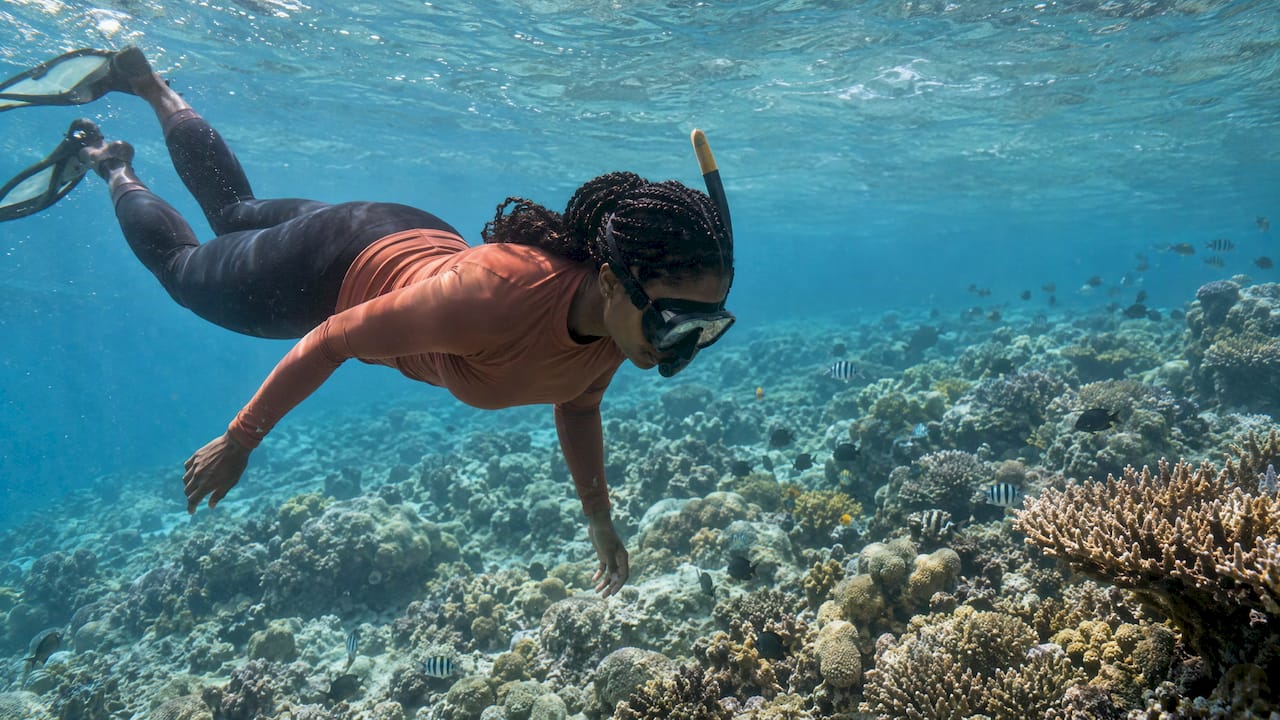
Two timing notes. Whale sharks are present around the archipelago from October to March, and the calmer diving months around Mnemba Atoll run through the dry season. If snorkeling or diving is your priority, plan your dates around that.
For a couple’s dinner that feels like an occasion, Dinner on Demand is available to our guests.
Safety, dress and local customs
Zanzibar is welcoming, and the common-sense rules are short.
- Road safety first. Bradt’s authors argue that road accidents, more than disease or crime, are the most likely way a visitor comes to harm. Travel in daylight, wear a seatbelt and never accept a lift from a driver who has been drinking.
- Pickpockets in Stone Town. Bradt warns of occasional bag and camera snatching in the narrow streets of Zanzibar Town. Carry a plain bag, leave valuables in the room safe and avoid displaying jewelry or expensive cameras.
- Dress modestly off the beach. The island is overwhelmingly Muslim. Cover shoulders and knees in Stone Town and in villages. Swimwear is fine on the beach and at your resort.
- Ramadan. Local eateries may close or shorten their hours during daylight, while resorts keep serving. The dates move each year, so check them when you book.
What to pack
The packing list is shorter than you think, because the climate is hot and humid and the resort handles the rest.
- Light cotton and linen clothing. Breathable fabrics cope best with humidity.
- One modest outfit per person for town days. Long skirt or trousers, shirt with sleeves, and a scarf or shawl.
- Swimwear, a cover-up and a hat. Pack two swimsuits so one is always dry.
- Reef-safe sunscreen and insect repellent. The sun at this latitude is strong all year.
- Water shoes if you will swim or wade on the east coast at low tide, where coral and sea urchins are common.
- A power adapter. Check your hotel’s socket type before you go. Many travelers bring a universal adapter.
- Documents. Printed visa, health form confirmation, insurance certificate or QR code, and a yellow fever certificate if it applies.
- Cash. The Tanzanian shilling is the local currency, though hotels, tours and park fees are often quoted in US dollars. Bring clean, recent notes and a card as a backup.
Soft bags are easier than hard suitcases on small domestic flights, which often have tighter baggage limits.
Budgeting for the trip
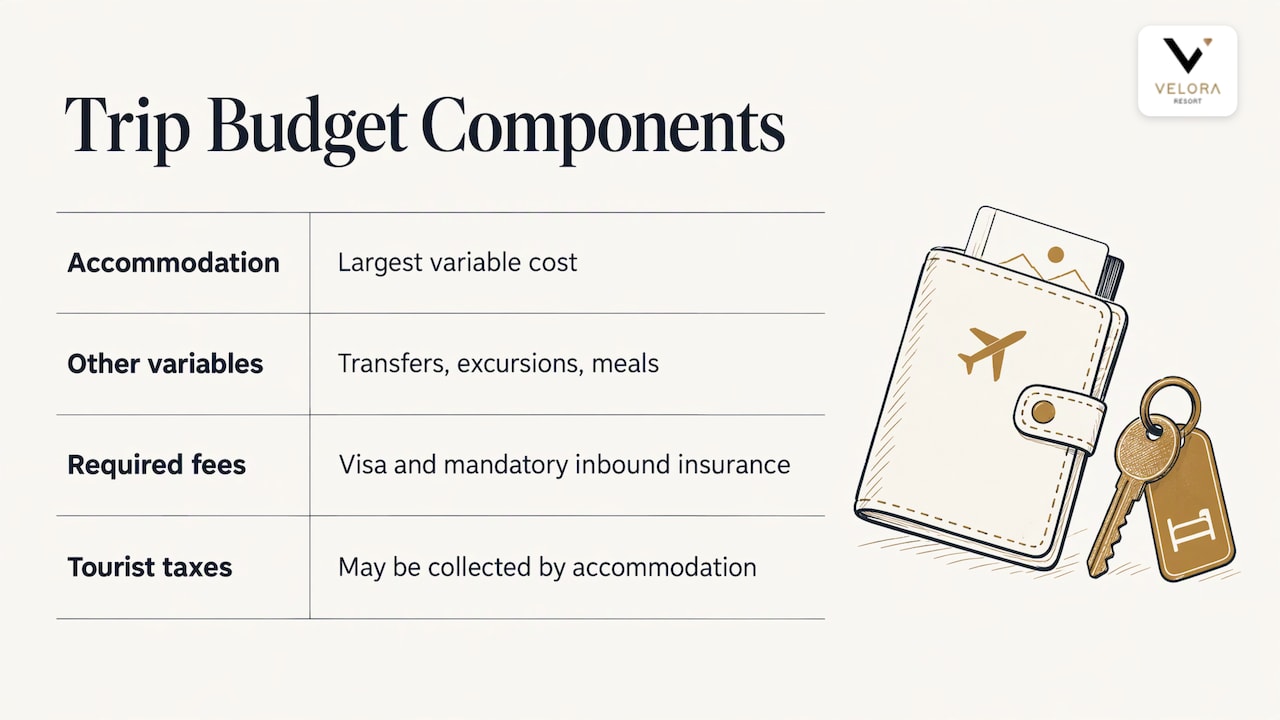
Your hotel choice swings the total more than anything else. After that, the main variable costs are transfers, excursions and meals. Set aside the visa fee, the mandatory inbound insurance and any local tourist taxes your accommodation collects. Excursion prices in the table above give you a realistic range for activities. For a family or a group, add up the per-person prices and decide which two or three outings matter most, then leave the other days free.
Why a small Kendwa resort suits this trip
A first Zanzibar trip involves a long flight, paperwork, an unfamiliar transfer and a lot of choices. A small resort takes most of that off you. At Velora, the same team that welcomes you can arrange your airport transfer, your excursions and a dinner on the terrace, and the pool, wellness treatments and the beach are a few steps away. We built the resort for couples, families and small groups who want a tranquil stay with personal attention.

To see room types and plan your dates, start at Velora Resort in Kendwa.
FAQ
Is Zanzibar suitable for families?
Yes. The northwest beaches are swimmable at all tides, which makes them easy with children. Choose a room type that fits your party, such as a triple room, and book transfers in advance so you are not negotiating after a long flight. Each child traveling with a guardian needs their own health form.
Do I need travel insurance for Zanzibar?
Non-resident visitors must hold the government’s mandatory inbound travel insurance, which covers up to 92 days and is bought from the insurer linked to your first point of entry. Keep the certificate or QR code with you. Separate private medical and trip insurance is a sensible addition, and a doctor or travel clinic can advise on vaccinations.
How many days should I spend in Zanzibar?
Five to seven nights suits most travelers: a night or two in Stone Town, then beach days and two or three excursions. Three days is possible but rushed, and ten or more lets you add a mainland safari.
What should I wear in Zanzibar?
Beachwear is fine on the beach and at the resort. In Stone Town and local villages, cover your shoulders and knees. Light cotton or linen works best in the humidity.
Sources
- Zanzibar Travel Information and Guide, Bradt Guides
- Entry requirements, Tanzania travel advice, GOV.UK
- Traveler’s Health Portal, Zanzibar Ministry of Health
- Tanzania travel advice, Ireland Department of Foreign Affairs
- Tanzania Travel Health Advice, TravelHealthPro (NaTHNaC)
- Public notice on mandatory inbound travel insurance, Zanzibar Insurance Corporation